City field note 02
Old Sacramento remembers the city as a western crossing point.
The riverfront district ties commerce, communication and the railroad to preserved streets and museum collections.
Old Sacramento sits close to the river where the city’s commercial story accelerated. California State Parks describes the historic district as more than fifty buildings representing Sacramento’s 1850s business district. The area was designated a National Historic Landmark in 1965. Its significance comes not from a single façade but from the way transportation, trade and communication converged there.
A district shaped by movement
The park’s history identifies Sacramento as the western terminus of the Pony Express and the first transcontinental railroad and telegraph. Those systems compressed distance in different ways: riders, rails and wires moved information and people across a continent. River traffic and nearby streets connected that larger network to warehouses, hotels, shops and offices. Preserved blocks help visitors read that relationship at walking speed.
The district today is not an untouched 1850s streetscape. Preservation and interpretation involve choices about buildings, public space and the stories placed inside them. State Parks manages Old Sacramento State Historic Park, and multiple museums and historic resources occupy the area. Current business hours and event operations vary, so official park and museum pages are the reliable place to plan a visit.
The railroad collection gives scale to the story
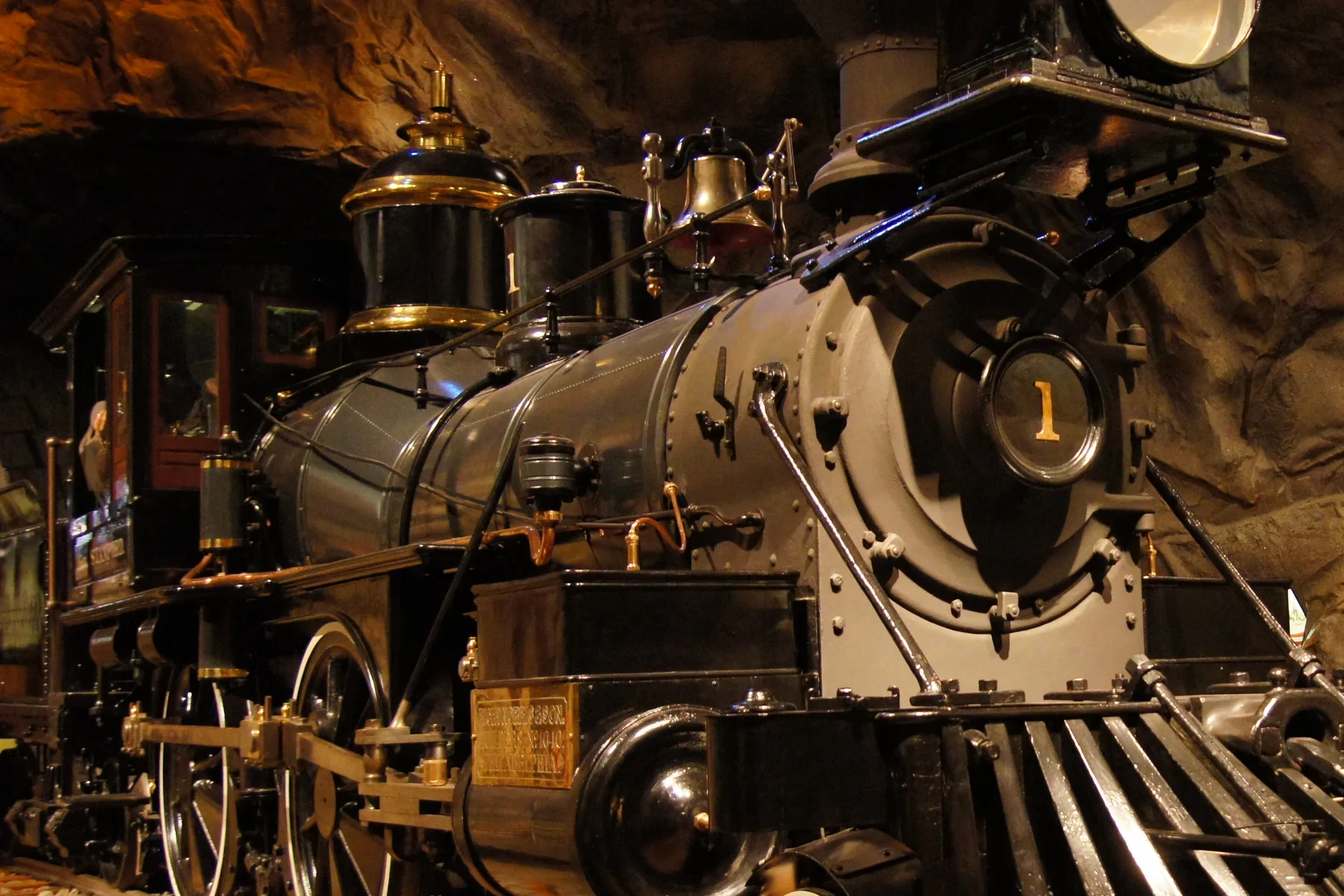
The California State Railroad Museum is located within the historic park. Its locomotives and rail cars make the physical scale of rail technology immediate: wheels, boilers, passenger spaces and working components are larger and more complex than a photograph suggests. The museum also interprets the labor, engineering and social change connected with railroad expansion rather than treating trains only as decorative objects.
The museum operates additional experiences outside its main building, including excursion-train programming when scheduled. Availability changes, and some activities are seasonal or separately ticketed. The institution’s current visitor information should be checked before travel. That practical detail mirrors the larger historical point: rail systems only work through coordinated routes, maintenance, people and timetables.
At street level, the historic park also shows how a riverfront district can be adapted for later public use. Boardwalks, reconstructed or preserved interiors, museums and present-day businesses occupy the same general area, but they do not all date from the same moment. Official interpretation is useful precisely because it separates surviving fabric, restoration and modern operation. That distinction keeps the story more accurate than treating the district as a movie set.
The practical insurance bridge: make an inventory useful
A museum collection is not a model for insuring ordinary household property, and this page does not imply that it is. The sensible connection is documentation. A home inventory should identify significant property with photographs, receipts, model or serial numbers and appraisals where appropriate. Collectibles, art, tools, business property and unusual equipment can be subject to special limits or valuation rules. Ask whether personal property is settled at replacement cost or actual cash value and whether an endorsement or scheduled item is needed. For vehicles, keep maintenance and ownership records through secure channels. Never put account, policy or payment numbers into this website. The policy actually issued controls every limit and exclusion.
Primary sources
District details were checked against California State Parks’ Old Sacramento State Historic Park page and its historical overview. Museum context and operating information come from the California State Railroad Museum. The documentation guidance follows the California Department of Insurance Residential Insurance guide. Use the institutions’ current pages for schedules and access.